
|
The Mission of Educational Solutions - Helping Educators and Parents Solve the Puzzle of Learning Differences is to provide the services necessary to assist children demonstrating difficulty learning. This is accomplished by first identifying a child's unique pattern of strengths and challenges, then developing a plan of action to support effective progress and collaborate with educators and parents to support the child's development. This systematic and comprehensive approach can include consultations, observations and trainings. |
|
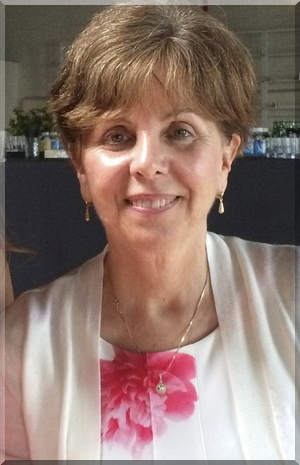
Mary Hughes is a seasoned educator with 41 years experience in the fields of Special Education and Early Education. She graduated Summa Cum Laude from Bridgewater State College with a Bachelor of Science in Special Education. She holds a Masters Degree and Certificate of Advanced Graduate Study in School Psychology from the University of Massachusetts at Boston. Initially in her career, Mary worked in Brockton, MA in the Brockton Public Schools at the Preschool and Diagnostic Center and then at Catholic Charities Agency and the Mainspring Shelter. For the past 23 years until she retired in June of 2014, Mary worked in the Bridgewater-Raynham Regional School District, first as an inclusion preschool teacher and for the last 14 years as a school psychologist at the early childhood level. In 1995, while an inclusion preschool teacher, Mary won the Althea Lindsay Teacher of the Year Award. For the past 14 years, Mary has been a Senior Visiting Lecturer at Bridgewater State University in the Special Education and Communication Disorders Department. Mary is a member of the National Education Association, Massachusetts Teachers Association, Brain Network at Bridgewater State University, a member of the Advisory Board for the Center for Educational Neuroscience Application (CENA) at Bridgewater State University and a member of the Learning and the Brain Society. |
|
1. 41 years of experience in Special Education 2. Psycho-educational assessment 3. Social skill development at the Early Childhood Level 4. Mentoring "new to the field" staff 5. Extensive knowledge base of Autism Spectrum Disorder, Developmental Delay, Learning Disability, Intellectual Disability, Emotional Disorders, A.D.H.D., Processes involved in Learning, Classroom Management and working collaboratively with Parents 6. Daily consultations with parents, staff and administrators with regards to any issue, concern or questions regarding students' development and academic performance at the early childhood level |
|
1. PARENTS AND EDUCATORS AS PARTNERS IN CHILDREN'S DEVELOPMENT This essentially important relationship will be discussed within the context of educators as members of a "helping" profession. This training will cover various parenting styles, how to conduct a helpful parent conference, research based effective characteristics of "helpers", how to help parents understand when staff have concerns about a student's development. In addition, a special emphasis will be placed on how to work with parents whose children have an identified special need as well as understanding the challenges that these parents face each day. 2. UNDERSTANDING THE SPECIAL EDUCATION PROCESS FROM REFERRAL TO ELIGIBILITY DETERMINATION/SERVICE DELIVERY This training will highlight the key components of the special education law (IDEA). It will include the transition process from Early Intervention services to Public Schools, types of assessments and how to understand formalized reports of standardized testing, special education time lines, determining eligibility, the Individual Education Plan (IEP) and Parent's Rights under the IDEA. 3. RED FLAGS IN EARLY DEVELOPMENT AND STRATEGIES TO HELP CHILDREN TO COMPENSATE FOR LEARNING DIFFERENCES This training will review all the hallmark "red flags" in development that indicate that a young child has a learning delay or disorder. An in-depth discussion of the various processes(i.e. executive functions, memory, auditory and visual processing, sensory integration, motor planning and phonological awareness) involved in learning will be discussed. Accommodations and strategies to support efficient processing will be discussed. 4. THE PROCESS OF ATTENTION AND IT'S IMPACT ON LEARNING A developmental perspective on attention and it's relationship with memory and learning will be discussed. The various reasons that children can be inattentive in a classroom setting will be considered. A discussion of the characteristics of Attention Deficit Hyperactivity Disorder will be discussed. Current research on this topic and best practice strategies will be reviewed. 5. CLASSROOM MANAGEMENT WITH AN ECOLOGICAL PERSPECTIVE AT THE EARLY CHILDHOOD LEVEL This training, which takes an ecological perspective will assist educators in developing effective classroom management strategies. This will include not only an understanding of behavior management strategies and functions of behavior, but in addition factors such as how children's learning styles as well as that of the teacher impact a classroom, as well as the role of temperament and sensory functioning as considerations in creating a supportive and enriching classroom climate. 6. TEACHING WITH THE BRAIN IN MIND This training will review current brain research with regards to how children learn. A basic introduction to how the brain works will be covered as well as brain based interventions that support children's learning. |
|
"Mary is highly professional as demonstrated by her dignified demeanor.�Mary inspires trust and confidence within our school community and has high personal and professional standards.�As a school psychologist, she is an expert at addressing many issues including abuse,trauma,psychological disorders,learning disabilities,special needs and bullying.She communicates effectively with parents, teachers and others so that they can understand the nature of the student's difficulties and how to better serve the student's needs. This inherent ability promotes teachers and parents to work together, navigating all the options to assist the student's school �success which enhances home-school collaboration successfully." Donna Holt, M.Ed., First Grade Teacher "I always looked forward to Mary's visits as she would bring her expertise in teaching, knowledge about special education,and skill in working with students, parents and colleagues. Mary always maintained a professional demeanor regardless of how difficult the situation. Mary frequently had suggestions about how to motivate my students in a positive way that would help each student to reach their potential and make effective progress reaching their benchmarks and goals."� Denise Lindsay, M.Ed., Preschool Special Education Teacher "I was fortunate to have Mary as a mentor. With her outstanding knowledge of classroom management, skills in diagnosing learning difficulties and her compassion for children at risk, she has guided me in my role. Mary schedules �weekly meetings with me and the classroom teachers so that we may be proactive on classroom strategies to assist our students in reaching their potential in the classroom. Mary has been instrumental in implementing classroom management strategies to increase positive classroom environments conducive to learning in an increasingly demanding general curriculum. I have witnessed first hand during Team meetings Mary's gift of compassion. She is able to gently and thoroughly decipher test results for parents without overwhelming them and creates a positive atmosphere pausing to check for understanding, agreement and allowing for questions." Mary Jean Chiocca, M.Ed, Special Needs Teacher-Kindergarten level |